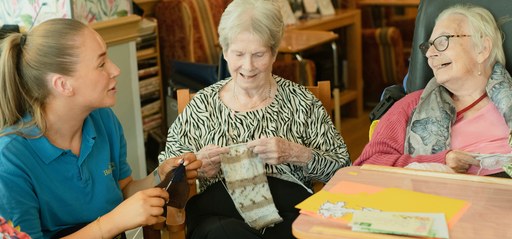
Short answer: Dementia care at home means supporting a person with dementia in their own home, with help from family and trained carers. A steady routine, a safe home and calm communication make daily life easier. Most families add professional help as needs grow, from a few visits a week to live-in care.
Dementia affects memory, thinking, mood and the ability to manage everyday tasks, and it changes over time. Many people prefer to stay in their own home for as long as possible, where the surroundings are familiar. This guide explains how to build a routine, make the home safer, communicate well, know when to get professional help and find funding. It focuses on practical care in the early and middle stages. If you are looking for later-stage information, see our guide to the signs that death is near in dementia.

Why do people with dementia often do better at home?
Familiar rooms, objects and routines can reduce confusion and anxiety. Moving to a new place can add stress and disorientation. At home, the person can keep their own habits, see neighbours and keep pets. That said, home care only works if the home is safe and the carer is not worn out. Plan for both.
How do you build a daily routine?
Routine gives structure and reassurance. A few simple habits go a long way:
- Keep wake-up, meal and bedtimes the same each day.
- Plan the main activity in the morning, when many people feel best.
- Offer simple choices, such as two shirts, rather than a full wardrobe.
- Include something enjoyable every day, such as music, a short walk or looking at photographs.
- Leave time for rest and quiet.
- Use a large clock and calendar showing the day and date.
If evenings are difficult, keep the house calm and well lit, reduce noise, and avoid caffeine late in the day.
How do you make the home safer?
- Add good lighting, especially on stairs, in hallways and at night.
- Remove loose rugs and clutter that could cause trips.
- Fit door alarms or sensors if the person may wander.
- Lock away cleaning products and extra medicines.
- Label cupboards with pictures or words to help the person find things.
- Check the cooker, water temperature and electrical appliances for safety.
- Keep a recent photo and a list of emergency contacts to hand.
An occupational therapist can visit to suggest adaptations. Ask the council or GP for a referral.
How should you talk to someone with dementia?
- Approach from the front, make eye contact and say their name.
- Speak slowly, in short sentences.
- Ask one question at a time, and give time to answer.
- Do not argue about facts. Reassure them about feelings.
- Use a calm tone and gentle touch if it is welcome.
- If they are upset, try to find the feeling behind the words and respond to it.
How do you handle challenging behaviour?
Agitation, repeated questions, suspicion and wandering are common in dementia. They are usually a response to pain, fear, confusion, hunger, tiredness or an unmet need. Look for the trigger, change the environment, and stay calm. If behaviour suddenly worsens, ask the GP to rule out infection, pain or a medicine side effect.
When should you get professional help?
Consider help when the person is missing meals or medicines, having falls, getting lost, or the main carer is exhausted. The right level changes over time:
| Stage of need | Typical support |
|---|---|
| Early | A few home care visits for meals, medicines and company |
| Middle | Daily visits with personal care and safety checks |
| Later | Live-in care or night support |
| Final stage | End of life care at home or in a care setting |
Specialist dementia carers are trained to understand communication changes and to support daily life with patience. Ask any provider how their carers are trained in dementia and how they keep the same carers visiting.
How is dementia care at home funded?
Start by asking the council for a care needs assessment, then a financial assessment. Some people may qualify for Attendance Allowance, and a smaller number for NHS Continuing Healthcare where health needs are the main issue. Dementia UK’s Admiral Nurses give free specialist advice to families, and your GP or memory service can tell you what else is available locally.
How do you look after yourself as a carer?
Caring for someone with dementia is rewarding and tiring. Ask for a carer’s assessment, share the load with family, and book regular breaks. Respite care can cover short breaks when you need them. Look out for signs of burnout, such as constant tiredness, low mood or feeling resentful, and speak to your GP.
Frequently asked questions about dementia care at home
Can dementia be cared for at home?
Yes, often for many years, with the right support and a safe home. Needs usually increase, so the plan should be reviewed regularly.
How many hours of care does someone with dementia need?
It varies widely. Start with the tasks that are hardest and add hours as needs change. Some people need only a few visits a week, while others need round-the-clock support.
What if they refuse help?
Introduce a carer slowly, as a friend or helper rather than a “carer”, and keep the same carer where possible. Trust takes time.
Is dementia care at home cheaper than a care home?
It depends on hours needed. Part-time visits are usually cheaper than a care home, while 24-hour care can cost about the same. See live-in care vs care home for a comparison.
When should you review the level of care?
When needs cannot be met safely at home or the carer’s health is suffering. Ask the council for a care needs assessment and speak to the GP about the right level of support.
Talk to our team
Book a free, no-obligation care assessment on 01376 433 917 or through our contact page. We are CQC-registered and support families across London, Essex and Darlington.
You may like
- 10 Signs Death Is Near in Dementia
- What Is Emergency Respite Care?
- How Much Does Home Care Cost Per Hour UK?
Sources and further reading
- NHS: Looking after someone with dementia
- NHS: Coping with dementia behaviour changes
- NHS: Communicating with someone with dementia
- CQC: Choosing social care